
Paralysis Ticks: What Every Pet Owner Needs to Watch For
We are seeing more and more tick cases each year, predominantly dogs, but we always see a few cats as well. It used to be quite uncommon for us to see tick cases, especially originating from Warwick itself, but this has changed in recent years.
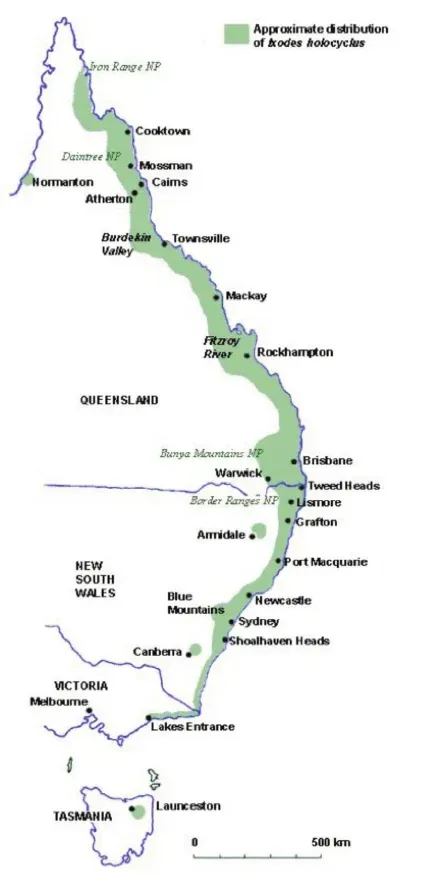
Many of our cases originate from Maryvale- it’s a real hotspot, likely due to the close proximity of the Main Range National Park. Toowoomba and Gatton are also very high risk, and we have many clients travelling back and forth, or to other areas such as Brisbane, the Sunshine Coast, and the Gold Coast.
Bandicoots are the natural host of the paralysis tick, and will often spread them as they move around - so if you have these little guys in your area/backyard, then your pets could be at risk!
Scratching your dog behind the ears and notice something that shouldn't be there… like a little lump, firm, and attached. Is it a scab? A grass seed? Or is it a tick?
Many ticks you find on a pet are harmless. But one species in particular, the paralysis tick, can put a healthy pet in hospital within a few days, and the early signs are often easy to miss.
What is a paralysis tick?
The paralysis tick (Ixodes holocyclus) is an Australian tick species that injects a toxin in it’s saliva as it feeds. That toxin stops your pet’s nerves from talking properly to their muscles. The effect starts small and works its way through the body — first their back legs, then the front, then the muscles that control swallowing and, finally, their breathing.
What’s important to know is that a paralysis tick usually needs to be attached for around three to four days before a dog shows any sign at all, and the tick has to be at least partially engorged (at least 4mm long) before the toxin starts to do real damage.
The signs of a paralysis tick, in the order they usually appear
Tick paralysis follows a fairly predictable path. Knowing the order matters, because the early signs are the ones you can act on.
Stage 1: the things that look like nothing much
- Your pet is off their food, a bit flat, or just not themselves
- You notice a change in the bark — hoarse, softer, or a different pitch altogether
- They are breathing heavier than usual
- They have a dry cough, start gagging, or bringing up their food or water
- They start drooling
- Cats might be reluctant to jump up onto furniture.
Stage 2: the more obvious signs
- Their back legs look unsteady or drunk, especially getting up
- They start sitting down after a short walk, or not wanting to walk at all
- They have a stagger that gets worse through the day
Stage 3: the emergency signs
- They’re unable to stand or hold themselves up
- They have laboured or grunting breathing
- Their gums look pale or blue-tinged
- They collapse
Can cats get a paralysis tick?
Yes - Cats can get tick paralysis too, and tend to show it as heavy breathing, withdrawal/hiding, and a wobble. Symptoms are often milder with less warning than dogs, but just as serious.
What can I do to prevent tick paralysis?
We recommend that you firstly use preventative treatments and do regular tick checks on your pet. Keeping cats indoors, and keeping outdoor areas clear and mowed down regularly can be helpful too
Tick prevention products
There are many good options out there now, 12-month injection, monthly and three-monthly chews, spot-on treatments, and collars.
Which paralysis tick treatment is more effective?
The short answer is the one you give them consistently and on-time. All are designed to protect your pet and prevent them from becoming unwell from a paralysis tick.
Choose the option that best suits your circumstances and can be administered when needed (monthly, quarterly or yearly). The important thing is that you don’t leave your pet unprotected for days, weeks or months. Prevention is always better than cure and sometimes by the time we see certain pets, it can be too late.
If you’re busy and have a habit of forgetting (like a lot of us), book in your injectable, 12-month flea and tick treatment (dogs only, sorry!). This is easy, convenient and means your pet will be protected for 12-months and can be done at your next visit. It can often be combined with other treatments, such as vaccinations or heartworm prevention.
What matters in preventative measures is:
- They must be year-round, not just summer. Ticks can be active outside their peak times, and a gap in cover is where trouble starts.
- They must be dosed properly and based on your pet’s current weight. Underdosing can be fatal.
- You need to give the right product for the right species. For example, some dog tick products are toxic to cats, so never share between pets.
- They must be given on time. A chew given a fortnight late is a fortnight unprotected, so always make sure you know when it’s coming up and can get organised.
It’s also worth noting that sadly no product kills a tick instantly, which is why the daily search still matters even on a well-covered dog or cat.
How to search your pet properly for paralysis ticks
We recommend you do it once a day, in good light, in the same order every time so you don't skip a spot. Use your fingertips, (not just your eyes) and keep in mind that you're feeling for a lump the size of a grain of rice or larger. Ticks like warm, moist, and protected areas.
Where to start your search:
- Start at the nose and work back over the head
- Inside and behind both ears, and the folds
- Around the eyes, lips, and under the chin - check inside the lips too
- Down the neck and chest, into the armpits
- Along the back and belly
- Between every toe and around paw pads - including the dew claw!
- Under the tail, and around genital areas.
- Make sure to check under collars! This is a favourite place for ticks to hide, and it is often missed by owners.
Most ticks are commonly found forward of the shoulders, but not all of them. Long-coated dogs need a slower search, and a clip over Summer makes it much easier to find them.
What to do if you find a paralysis tick
You need to safely remove it as soon as you can. Here’s how:
- Don’t dab it with anything first, NO methylated spirits, kerosene or Vaseline - these do nothing to help, and just irritate the area.
- Get hold of it as close to the skin as possible with a tick remover, your fingernails, or fine tweezers and pull it straight out — don't twist or squeeze the body.
- Keep the tick in a sealed bag or container and bring your pet (and the tick) into us at Condamine Vets. Having the tick brought in with your pet helps us confirm the species, and keep watching your dog closely for at least 24 to 48 hours, because some signs can appear or worsen after removal of the tick.
What if I can’t remove the paralysis tick?
If you can't get the tick off, don't fight it. Where possible, call us straight away, then bring your pet in as quickly as possible and we can remove it for you. We recommend having your local vets number and a 24-hour emergency number in your contact favourites - so you’re able to quickly call if theres an emergency.
When to see your vet:
Always go straight to your local vet or 24-hour emergency vet if your dog or cat has any of these symptoms:
- A wobble or weakness in the back legs, however mild
- A changed bark or meow — hoarse, softer, or a different sound
- Gagging, coughing, retching, or bringing up food or water
- Noisy, heavy, or laboured breathing
- Unable to stand — this is a true emergency, call ahead and come now
You should also call your vet for advice if:
- You've found and removed a tick, even if your pet seems completely fine
- You've found a tick you can't fully remove
- Your pet has been to a coastal or bushy area in the last two weeks and seems off
What we see locally:
We are seeing more and more tick cases each year, predominantly dogs, but we always see a few cats as well. It used to be quite uncommon for us to see tick cases, especially originating from Warwick itself, but this has changed in recent years.
Many of our cases originate from Maryvale- it’s a real hotspot, likely due to the close proximity of the Main Range National Park. Toowoomba and Gatton are also very high risk, and we have many clients travelling back and forth, or to other areas such as Brisbane, the Sunshine Coast, and the Gold Coast.
Bandicoots are the natural host of the paralysis tick, and will often spread them as they move around - so if you have these little guys in your area/backyard, then your pets could be at risk!
Frequently Asked Questions:
How long does it take for a tick to paralyse a dog?
Usually about three to four days of attachment before the first signs show, though it can stretch to two weeks in cooler weather. The tick needs to feed and swell before it delivers enough toxin. This is why a dog can seem perfectly fine for days after picking one up.
Can a dog recover from tick paralysis?
Yes — most dogs treated early recover well. Treatment is tick antiserum plus hospital care while the toxin clears, which usually takes a few days. In severe cases, oxygen and ventilation support may be needed. Outcomes are much better for dogs brought in at the first wobble than for those already struggling to breathe. I think it's important to note that many animals recover, but tick paralysis can be fatal despite treatment, in some cases it deteriorates really rapidly.
What happens if you remove a tick from a dog?
Remove it straight away, close to the skin, pulling straight out without squeezing the body. But removal doesn't stop what's already happening — signs can appear or get worse for 24 to 48 hours afterwards, so keep watching closely and call us if anything changes.
Do dogs still get ticks if they're on prevention?
Yes they can. No product kills a tick the instant it attaches, and cover can lapse if a dose is late or the wrong sized dose is given (based on weight). Preventatives make a serious case far less likely, but it doesn't replace a daily hands-on search through the coat.
What time of year are paralysis ticks worst?
Ticks are most active from late winter through summer, peaking around October through to February. That said, cases turn up outside the peak whenever conditions are warm and damp, which is why year-round prevention beats seasonal prevention.
Not sure whether your dog's tick prevention is right?
Book an appointment with our team and we'll go through the important steps to help prevent your pet from contracting a paralysis tick.
Book online or call us on
(07) 4667 1176
Written by Dr Dr Christine Stirling,
BVSc (Hons), MANZCVS, Owner and Veterinarian at Condamine Veterinary Clinic.
This article is general information only and is not a substitute for veterinary advice. If you're worried about your pet, call us or your nearest emergency vet.
Recent Posts